
Vandastylis (Neostylis) Lou Sneary Care Guide: Growing Guide & Hybridisation History
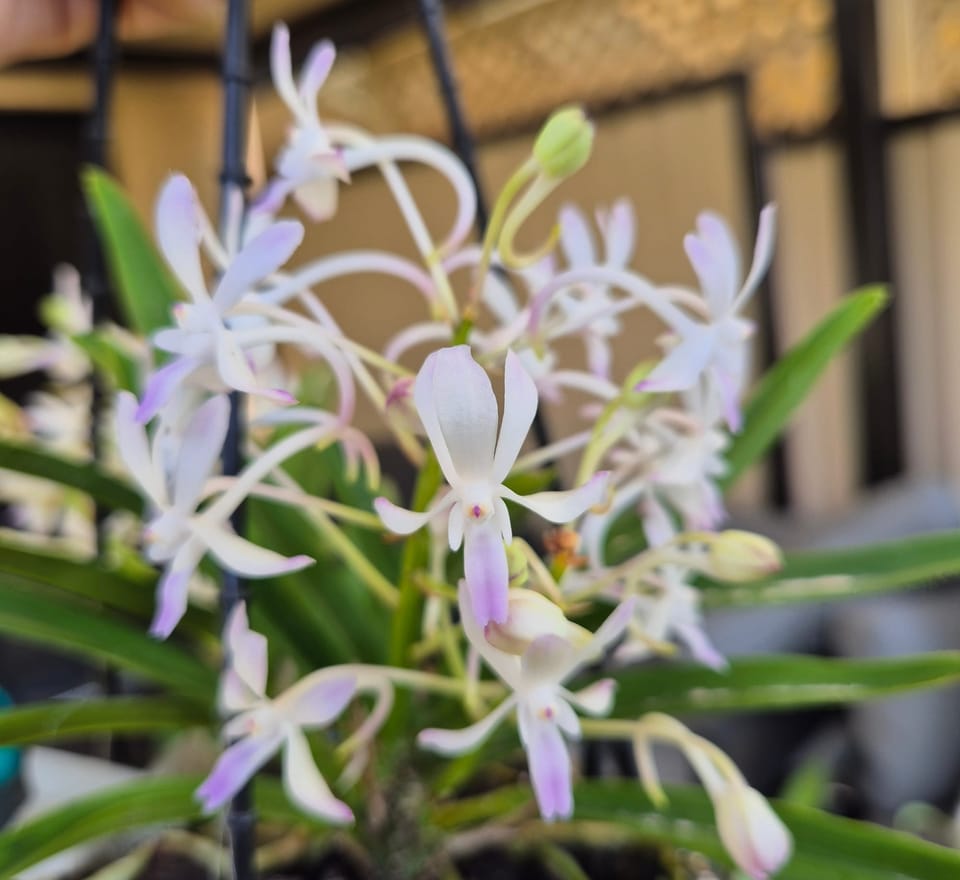
Did you know that the Vandastylis Lou Sneary has become one of the most influential orchid hybrids in modern breeding? This remarkable cross between Vanda falcata and Rhynchostylis coelestis hasn't just captured hearts with its fragrant white and pink blooms it's also become a cornerstone of compact Vanda breeding! I'll guide you through everything from its fascinating background to expert growing tips.
Parent Species Deep Dive
The genetic foundation of Vandastylis Lou Sneary comes from two remarkable species, each contributing distinct characteristics that make this hybrid so special. The first parent, Vanda falcata (formerly known as Neofinetia falcata), has been cultivated in Japan for centuries as Furan (風蘭). This miniature species is renowned for its amazing fragrance, compact growth habit, and cultural significance in Japanese horticulture.
The second parent, Rhynchostylis coelestis, is a warm-growing species from Southeast Asia known for its abundant flowering and ability to produce multiple flower spikes. It contributes vigor and floriferousness to its offspring, along with improved temperature tolerance.
Key aspects of each parent:
- Native to Japan, Korea, and parts of China
- Highly fragrant white flowers that often but not always is passed on.
- Compact growth habit (4-6 inches tall)
- Cold tolerant (can handle brief periods near freezing)
- Historical significance in Japanese culture
- Known for curved spur on flowers, this persists in most hybrids
- Clump forming making it and its hybrids into great plants for specimen culture
Rhynchostylis coelestis:
- Native to Thailand and surrounding regions
- Multiple spikes of small, fragrant flowers
- More warmth-loving than V. falcata and assists growers in tropical areas as cool nights are not needed for flowering.
- Larger growth habit (12-18 inches)
- Known for blue-tinted white flowers
- Excellent floriferousness carrying many more flowers than falcata.
Notable Lou Sneary Offspring
Vandastylis Lou Sneary has proven to be a notable parent in hybrid breeding, creating numerous award-winning offspring. Its ability to pass on compact growth habits while maintaining good flower size and shape has made it a cornerstone of modern miniature Vanda breeding.
Significant offspring include:
- Vandastylis Pine Rivers 'Blue' (Lou Sneary × Rhynchostylis gigantea)
- Vandachostylis Colmarie (Lou Sneary × Rhynchostylis retusa)
- Vandachostylis Blue Star (Lou Sneary × Vanda coerulea)
Breeding trends:
- Most successful crosses involve other compact species
- Strong inheritance of fragrance in offspring
- Tendency to pass on good flower substance
- Crossing with better shaped parents is critical
- Versatile parent for both pod and pollen
Future opportunities:
- crossing with Holcoglossums for more compact combinations
- more complex hybrids incorporating the old Asconcentrums to improve colour and shape.
- crossing with other small Vanda species like V. roebelingiana and V. javeriae for larger rounder plants compared to plant size.
- crossing with Renantheras to improve flower sprays.
Understanding Vandastylis Lou Sneary Orchids
Vandastylis Lou Sneary represents a perfect blend of its parents' best qualities. This compact hybrid typically grows to 6-8 inches in height, making it ideal for windowsill culture. The flowers appear in clusters of 5-15 blooms, each measuring about 1.5 inches across.
Distinctive characteristics:
- Flowers are predominantly white with pink to purple lips
- Strong sweet fragrance, especially in morning hours
- Multiple blooming seasons possible per year
- Compact but vigorous growth habit
- Excellent heat tolerance range
- Adaptable to various mounting and potting methods
Essential Growing Requirements
Success with Vandastylis Lou Sneary depends on providing conditions that satisfy both parent species' needs while taking advantage of hybrid vigour.
Light:
- Bright indirect light (2000-3000 footcandles)
- Morning sun tolerated, afternoon shade required
- Light green leaves indicate optimal lighting
- Protection from intense summer sun needed
Temperature:
- Day: 21-29°C
- Night: 10-18°C
- Can tolerate occasional temperature extremes and tolerates near freezing conditions as well as temps in the 40's for short periods
- Prefers 5-10°C day/night differential
Humidity:
- Optimal range: 60-80%
- Minimum 50% for good growth
- Higher humidity during active growth
- Additional misting beneficial in dry conditions particularly around roots to keep them green.
Watering and Fertilization Schedule
Proper watering is crucial for this hybrid, as it inherits varying water needs from its parents.
Watering guidelines:
- Water thoroughly when growing medium approaches dryness
- More frequent watering during growth season
- Reduce watering in winter months
- Use clean water (below 200 ppm dissolved solids)
Fertilisation:
- Weekly feeding during growing season
- Balanced fertilizer (20-20-20)
- Quarter to half strength recommended
- Monthly flushing to prevent salt buildup
- Reduce feeding during rest periods
Potting and Mounting Options
Vandastylis Lou Sneary adapts well to various growing methods, though proper air movement to roots is essential.it has the ability
Mounting options:
- Tree fern plaques
- Cork bark slabs
- Hardwood mounts
- Plastic mounts
- Ceramic plates with holes
Potting choices:
- Clay or plastic pots with excellent drainage
- Basket culture
- Small pots (2-4 inch) preferred
- Repot every 2-3 years
Media options:
- Large-grade bark mix
- Sphagnum moss (in humid areas)
- Charcoal and perlite blend
- No media (bare root in basket)
Troubleshooting Common Issues
Prevention is key with this hybrid, as it's generally resistant to problems when grown properly.
Common problems:
- Root rot from overwatering
- Leaf spotting from cold water
- Bud blast from environmental changes
- Spider mites in dry conditions
- Bacterial/fungal issues in poor air circulation
Prevention strategies:
- Regular inspection of roots
- Good air movement
- Proper spacing between plants
- Clean water and tools
- Prompt removal of dead tissue
Blooming Tips and Tricks
Vandastylis Lou Sneary can bloom multiple times per year under optimal conditions.
Bloom triggers:
- Temperature differential (day/night)
- Seasonal light changes
- Proper fertilization during growth
- Adequate rest periods
- Stable environment during spike development
Spike care:
- Support spikes early
- Maintain stable conditions
- Protect from physical damage
- Remove old spikes at base
- Consider humidity during bud development
Understanding the heritage of Vandastylis Lou Sneary helps explain why this hybrid excels as both a show plant and breeding parent. By combining the compact growth and fragrance of Vanda falcata with the floriferousness of Rhynchostylis coelestis, growers created a versatile orchid that continues to influence breeding today. Whether you're growing this beauty for its flowers or considering it for breeding, the care guidelines above will help you succeed!
Member discussion